
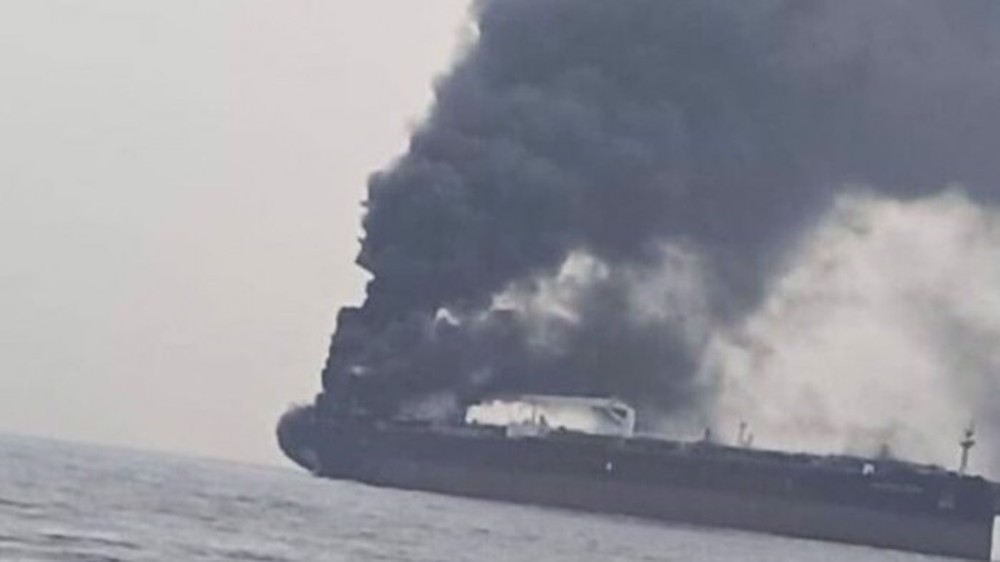
The International Monetary Fund has downgraded its 2026 economic outlook for the West and Central Asia, projecting a 0.3-percent contraction instead of the 1.9-percent growth forecast six months ago, as the war against Iran disrupts oil production, exports, and shipping through the Strait of Hormuz.
In its latest World Economic Outlook report, issued Tuesday, the IMF attributed the deterioration primarily to the prolonged closure of the strategic waterway.
Iran closed the chokepoint following the launch of the latest round of unprovoked American-Israeli aggression against the Islamic Republic on February 28.
The Islamic Republic and the United States agreed on a 60-day reopening period as part of a Pakistan-mediated memorandum of understanding in June, but American violations forced Tehran to re-establish the closure.
On Monday, Iran’s Foreign Ministry spokesman Esmaeil Baghaei reiterated the Islamic Republic’s condemnation of the American atrocities that had afflicted the strait with insecurity. “We are not pleased with this situation, because security in the Strait of Hormuz is essential above all to us,” he said, adding that the international community needed to understand which side was responsible for the situation.
Iran: Hormuz security cannot return to normal amid US blockade, economic warhttps://t.co/3HaqGlOmKY
— Press TV 🔻 (@PressTV) October 12, 2026
According to the IMF, the situation has disrupted regional trade and energy supplies. The fund expects a substantial recovery in 2027 on the condition that the strait reopens and production, exports, and logistics return to normal.
Persian Gulf economies face steep contractions
Iraq, Kuwait, Qatar, and Bahrain are expected to suffer the heaviest economic damage, with the IMF projecting double-digit contractions in 2026, followed by double-digit expansions in 2027 should disruptions ease.
Saudi Arabia is forecast to record a 3.3-percent contraction this year.
The world's largest crude exporter has been trying to bypass the Strait of Hormuz by using its East-West oil pipeline to transport crude to its Red Sea coast. However, the kingdom’s oil production and export capacity had also come under severe strain amid retaliatory strikes staged by Yemen in response to a 2015-present siege imposed by Riyadh on the impoverished country.
Military approach in Yemen will only complicate situation: Araghchi warns Saudi Arabiahttps://t.co/yKGJxJXU5t
— Press TV 🔻 (@PressTV) October 11, 2026
The United Arab Emirates is also projected to experience a 3.9-percent economic contraction in 2026.`
 This makes it easy to access the Press TV website