
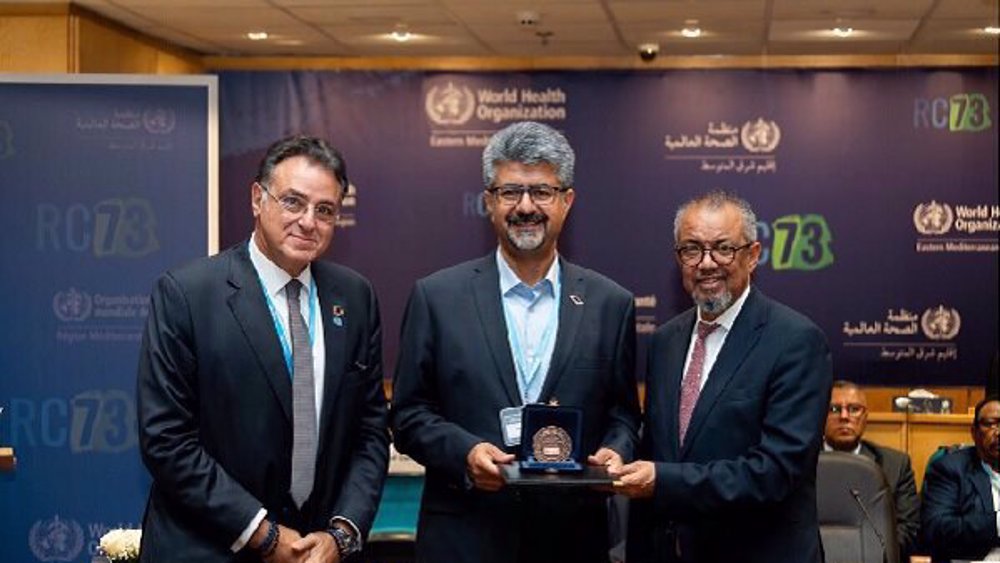
Iranian professor Amirali Hamidieh has received a World Health Organization (WHO) award for his contributions to cancer control in the Eastern Mediterranean Region, recognizing his pioneering work in pediatric cancer treatment and hematopoietic stem cell transplantation.
Hamidieh, a faculty member at Tehran University of Medical Sciences (TUMS), received the WHO Award for Cancer Control in the Eastern Mediterranean Region from WHO Director-General Tedros Adhanom Ghebreyesus on October 13, during a meeting of health ministers from across the region in Cairo, Egypt.
According to TUMS’s Public Relations Office, the award recognizes Hamidieh’s longstanding efforts to advance specialized cancer treatment and expand access to life-saving medical services for children.
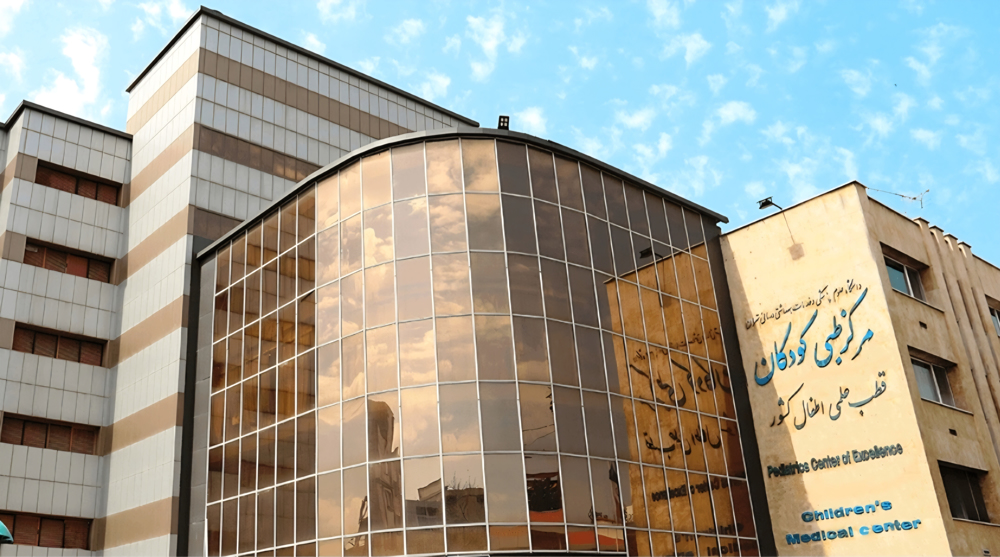
In his address at the ceremony, Hamidieh highlighted the establishment of Iran’s first pediatric hematopoietic stem cell transplantation center in 2007, a program that has since given more than 2,200 children a chance to survive.
He also pointed to the establishment of the region’s first unrelated donor registry in 2009 as a significant step toward improving access to transplantation and reducing inequalities in treatment opportunities for children who need it.
Hamidieh described the award as a collective achievement shared by the physicians, nurses, researchers, students, and other healthcare professionals working in pediatric cancer care.
He dedicated the recognition to children battling cancer, whose experiences continue to inspire medical research and clinical advances.
Calling for stronger regional cooperation in the fight against cancer, the Iranian professor stressed the need for greater scientific exchange, collaborative research, and more equitable access to advanced treatment technologies.
He also highlighted the potential of emerging approaches, including CAR T-cell therapy, CRISPR gene editing, and mRNA-based technologies, to transform cancer treatment, emphasizing that their benefits should be accessible to both children and adults across the Eastern Mediterranean Region.
The recognition highlights Iran’s contributions to specialized cancer care and the development of advanced medical treatments, as well as the importance of international cooperation in improving cancer outcomes and reducing disparities in healthcare access.
 This makes it easy to access the Press TV website