

A new investigation by Reuters claims that critical infrastructure across the Persian Gulf has been struck at least 135 times since the outbreak of the US-Israeli war of aggression against Iran, exposing severe vulnerabilities in US-backed air defense systems and causing billions of dollars in damage.
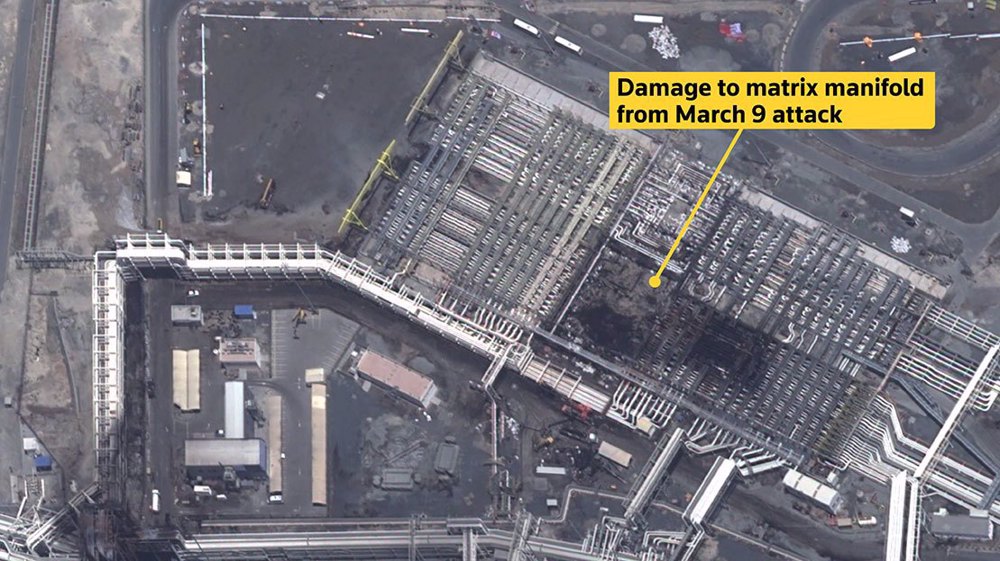
According to the report, at least 84 infrastructure sites across seven Persian Gulf countries have been damaged since the US and Israel launched their unprovoked military aggression against Iran on February 28. The strikes frequently hit essential equipment, causing prolonged disruptions to global energy supplies.
However, while the Reuters report attributes the widespread destruction to Tehran, military analysts and Iranian officials have cautioned that the attribution of these strikes is highly contested.
The murky nature of the regional war has raised concerns about false-flag operations, even as Iran maintains its stated doctrine of targeting US-linked assets in proportional retaliation.
Crucially, the Reuters investigation contradicts the official narrative frequently promoted by Persian Gulf monarchies.
In at least 34 official statements, regional authorities attempted to downplay the strikes, attributing severe structural damage to "falling debris" from intercepted missiles and drones.
Instead, the report documents direct hits on critical facilities, including the UAE’s Fujairah port—a vital outlet for oil exports that bypasses the Strait of Hormuz.
The port was struck at least 19 times, severely damaging oil storage tanks and pipeline distribution systems.
Other major casualties included Qatar’s Ras Laffan liquefied natural gas (LNG) facility, Saudi Arabia’s East-West Pipeline, and major industrial sites in Bahrain.
The strikes also exposed the glaring limitations of US-backed defenses.
Despite the heavy presence of American military forces and billions of dollars invested in advanced air defense systems like the Patriot and THAAD, critical regional facilities sustained repeated, direct damage.
Contested attribution
While Reuters broadly attributes the 135 strikes to "Iran and allied groups," the reality of the regional battlefield is far more complex, and blanket attribution to Tehran is highly problematic.
Iran has announced and executed retaliatory strikes against US-linked infrastructure, military bases, and allied energy assets in the region.
Tehran maintains that these specific operations are a legitimate, proportional, and legally sound response to the US and Israeli bombardment of Iranian sovereign territory and civilian infrastructure.
However, not all of the 135 documented incidents can be definitively attributed to the Iranian Armed Forces.
The region is currently home to a myriad of armed factions, and the fog of war has made verification difficult.
For example, when a strike hit an electrical substation at the UAE’s Barakah nuclear power plant—forcing a reactor to switch to emergency diesel generators—Abu Dhabi explicitly claimed the drone was launched by armed factions in Iraq, not Iran.
Furthermore, Iranian officials have repeatedly accused the United States and the Israeli regime of orchestrating false-flag operations in the region.
Tehran alleges that Washington and Tel Aviv have a vested interest in staging or exploiting rogue attacks on Persian Gulf infrastructure to frame Iran, justify further military escalation, and tilt global public opinion against the Islamic Republic.
Given this history, Western attempts to lump all regional sabotage and drone strikes under the umbrella of "Iranian aggression" are viewed by Tehran as a deliberate information warfare tactic.
Economic shockwaves
Regardless of the exact attribution of every individual strike, the cumulative effect has been devastating to the global economy.
Strikes on Qatar’s LNG facilities threatened a significant share of global gas supplies, while disruptions to Saudi pipelines undermined alternative export routes.
Combined with Iran's strategic mastery over the Strait of Hormuz, these infrastructural vulnerabilities have allowed Tehran to impose massive economic and strategic costs on the United States and its regional partners, driving global energy prices to record highs.
The infrastructural damage detailed in the report coincides with staggering losses for the US military.
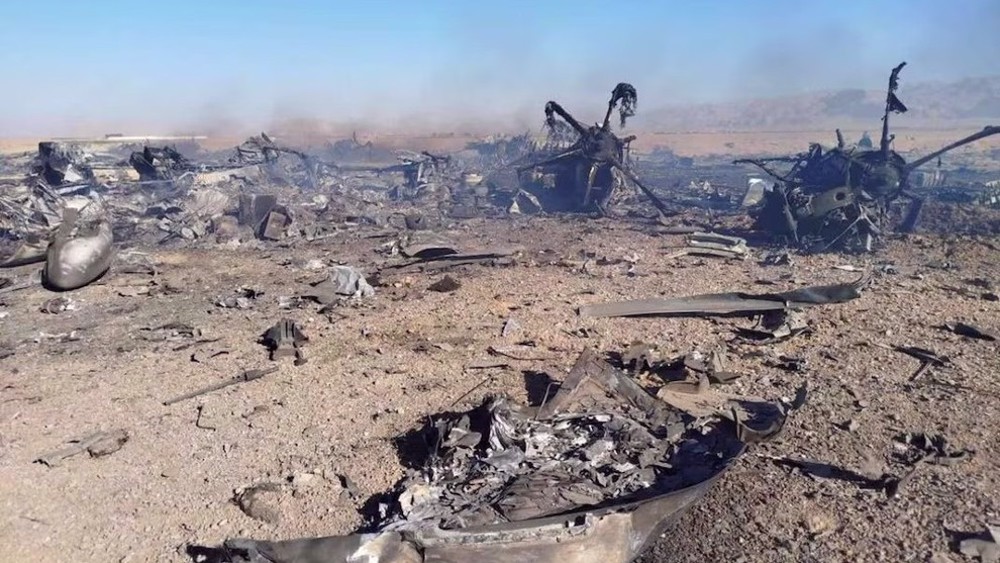
According to separate defense assessments, the US military has lost or suffered severe damage to at least 81 aircraft, drones, and helicopters since the war began, representing a financial loss of up to $3.3 billion.
The war began on February 28 when the US and Israel launched an illegal war of aggression against Iran.
After 40 days of Iranian resistance, successful retaliatory operations, and Tehran's tightening grip on the Strait of Hormuz, Washington was forced to accept a ceasefire on April 8.
However, the truce was short-lived. In July, in a blatant violation of the June 17 Islamabad Memorandum of Understanding (MoU) designed to end the war, the US conducted waves of deadly air raids on Iran and imposed an illegal naval blockade.
In response to this betrayal, the Iranian Armed Forces launched a new wave of devastating strikes against strategic American positions and US-linked assets across West Asia, ultimately declaring the Strait of Hormuz closed to all hostile and complicit traffic, further strangling the global energy market and exposing the fragility of US hegemony in the region.
 This makes it easy to access the Press TV website