

Iraq’s parliament has approved the remaining key members of the country’s government, including a deputy prime minister who is under US sanctions.
On Thursday, lawmakers voted to appoint Laith al-Khazali as a deputy prime minister. Laith is the brother of Qais al-Khazali, leader of the Asaib Ahl al-Haq resistance group.
Laith al-Khazali was kidnapped by US forces in 2007 over allegations related to an attack against American troops in Karbala in January of that year, which left five of them killed. He was released from US custody two years later.
Laith al-Khazali was hit by US sanctions in 2019 over his leadership role in Asaib Ahl al-Haq and alleged human rights abuses as well as the 2007 purported attack.
“It is outrageous but sadly not shocking that he has been appointed deputy PM of Iraq,” Republican US Representative Joe Wilson wrote on X.
The Iraqi parliament also named two other deputy prime ministers, as well as a new interior minister, defense minister, planning minister, minister of higher education and scientific research, and culture minister.
The other Cabinet posts had been appointed in May.
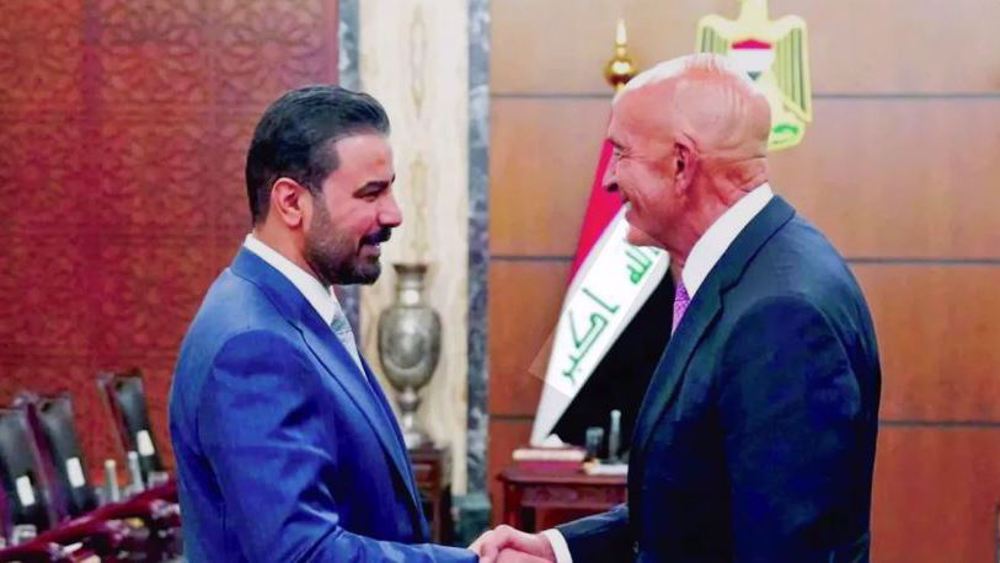
Following the appointments, al-Zaidi said in a statement that “we are embarking on a phase of accelerated, diligent work” and vowed to “move forward in implementing our government’s priorities and program, and in fulfilling the aspirations of all Iraqis.”
He noted that the government had worked over the past several months amid complicated domestic and international circumstances, including the war imposed by the US and Israel on Iran.
The premier has pledged to fight corruption and enhance Iraq’s sovereignty by completing the withdrawal of US forces from the country.
On September 30, the last US troops left a base in Erbil under an agreement between Baghdad and Washington to end the US-led military occupation.
The US invaded Iraq in March 2003 to overthrow Saddam Hussein’ regime, which the US falsely accused of possessing weapons of mass destruction.
The coalition of the US and its allies withdrew their troops in December 2011, but returned in 2014 after Daesh terrorist group took large swathes of land in the country.
Jomaa al-Atwani, head of the “Ufuq” research center in Iraq, said that the Americans are not friends of Iraq but rather a burden on the country, adding that Daesh was essentially an international conspiracy aimed at paving the way for the US return to the region.
 This makes it easy to access the Press TV website