
Several Turkish political parties have condemned the so-called “Mecca defense alliance” among Saudi Arabia, Pakistan, and Turkey, warning that the pact exploits the sentiments of Muslims to support the Saudi aggression against Yemen and serve the interests of the US and Israel.
Addressing his party's parliamentary group on Thursday, the leader of İYİ Party, one of the largest opposition parties in Turkey, decried the agreement. Musavat Dervisoglu also questioning why Turkey was being drawn into a military commitment whose "borders, threat and ultimate cost are all unclear."
"Whose enemy is Turkey declaring as its own enemy?" he said, adding "Who is this alliance against? Israel? Iran? The US? Or another country? What and who is the common threat?"
"What happens tomorrow if Saudi Arabia clashes with Iran? Will Turkey also become a party to that war?" Dervisoglu wondered.
He stressed that the agreement endanger the lives of the Turkish soldiers for the agenda of other countries.
"Will Mehmetçik pay the price for other states' political choices?" Dervisoglu asked, using a term referring to Turkish soldiers.
Dervisoglu also slammed the Ankara government for allowing Saudi Arabia to shape the Turkish foreign policy’s priorities.
He noted that the agreement's name, "Mecca", the home of Islam's most important mosque and holiest site, the Masjid al-Haram, was chosen deliberately to appeal to religious sentiment.
Dervisoglu called on Turkish people not to "fall into the trap of the US-Israel alliance that has descended upon the Middle East".
“The issue is not Mecca. Therefore, let us not take steps with the mindset of the polytheists.”
He also stressed that Turkey should not serve what he described as the "insatiable appetite of American and Israeli oil companies" while pretending to defy Washington and Tel Aviv.
"Mehmetcik is not the protector of Aramco," he said, in reference to the Saudi oil giant.
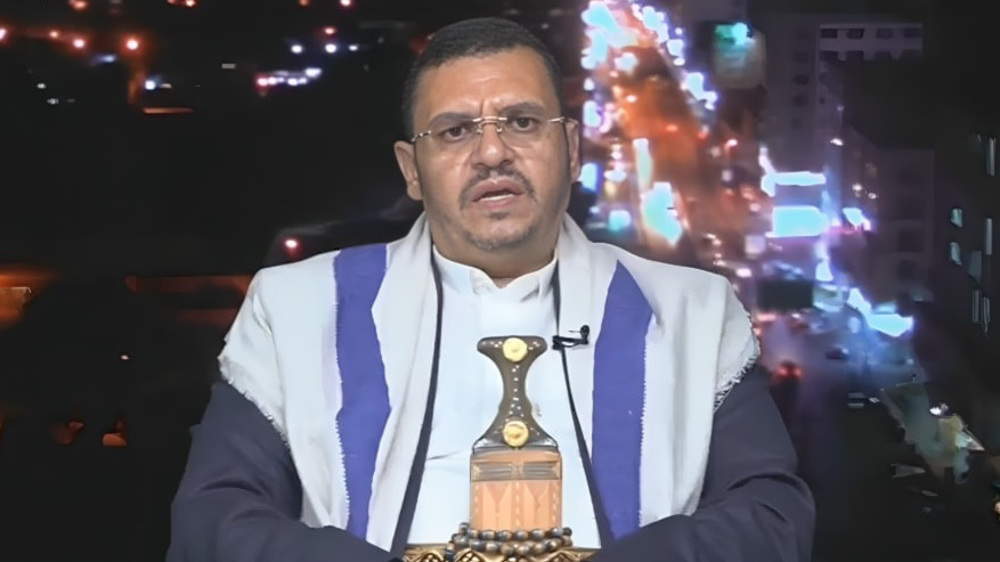
Ahmet Ozbay, the head of the Antalya branch of Vatan Party, said the statement issued by the three signatories of the agreement bears the hallmarks of US-Israeli interference.
He urged the Turkish government to quit the pact, which, he said, places the Turkish army under regional and foreign hegemony.
Samra Dincer, the deputy head of the Republican People’s Party (CHP), said that the "Mecca Agreement" was signed without its terms or content being disclosed, and has yet to be presented to the Turkish parliament.
Dincer stressed that she would not support any agreement that could jeopardize Turkey’s interests and security.
These come amid growing public anger in Turkey over the pact and concerns about its potential repercussions for the country’s national security.
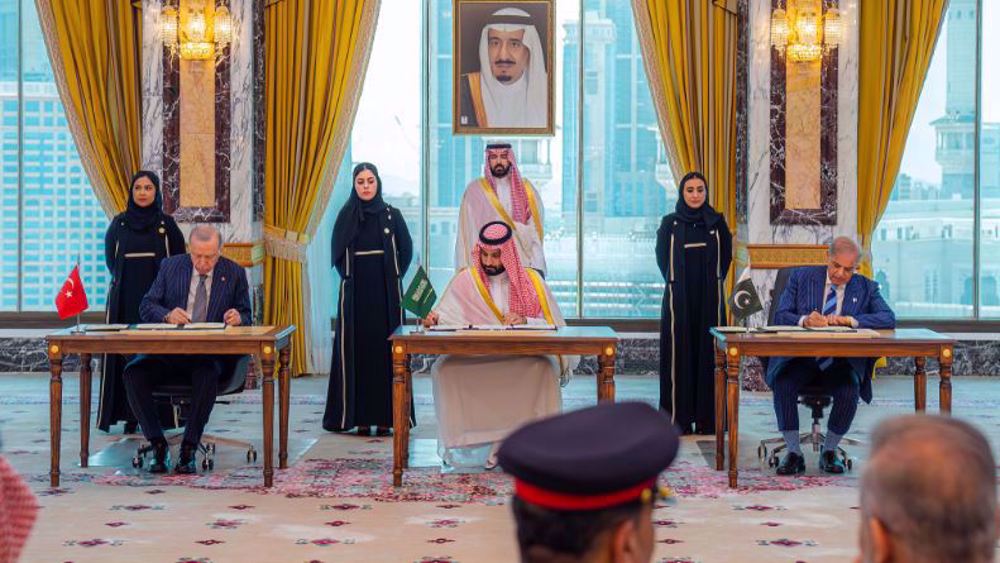
The Mecca Joint Defense Agreement was signed in August by Saudi Crown Prince Mohammed bin Salman, Turkish President Recep Tayyip Erdogan and Pakistani Prime Minister Shehbaz Sharif, with the three countries seeking to strengthen security and defense cooperation.
The agreement stipulates that an armed attack against any one of the three signatories would be considered an attack against all three.
The agreement came as the region sees two major wars, namely the Saudi Arabia on Yemen, and the US-Israeli imposed war on Iran.
The US and Israel launched another round of aggression against Iran on February 28, some eight months after carrying out unprovoked attacks on the country.
Iran swiftly retaliated by launching barrages of missiles and drones at the Israeli-occupied territories, as well as US bases and interests across the region.
Meanwhile, tensions have been heightened between Riyadh and Sana’a since July, with the kingdom claiming the Yemeni forces have tried to target the holy cities of Mecca and Medina.
The developments come after the rapid advance of the Yemeni military and Ansarullah fighters along Yemen’s Western coast and their control of Bab al-Mandab Strait.
Yemeni armed forces continue to consolidate their positions along the Western coast, taking additional measures to counter any attempt by Saudi-backed forces to make up for their losses.
In recent weeks, the Yemeni military has announced several successful naval operations targeting ships linked to Saudi Arabia in the Red Sea, enforcing the blockade and impacting Riyadh's energy exports.
The Yemeni forces have also carried out retaliatory attack on targets deep inside the kingdom, announcing that Saudi airspace and airports were unsafe, while excluding airspace over Mecca and Medina.
The conflict traces back to March 2015, when Saudi Arabia and a US-backed coalition launched a sweeping military campaign and blockade aimed at reinstalling a favorable regime in Sana'a.
Despite years of bombardment and the deployment of advanced Western weaponry, the Saudi coalition has failed to achieve its stated objectives.
Utilizing their advanced asymmetric naval capabilities, including drones and missiles, Yemen has shifted from a purely defensive posture to an active pressure campaign.
This strategy is designed to inflict direct economic and military costs on the Saudi regime until the siege is permanently lifted, the war is ended, and Yemen's full sovereignty is restored.
 This makes it easy to access the Press TV website