
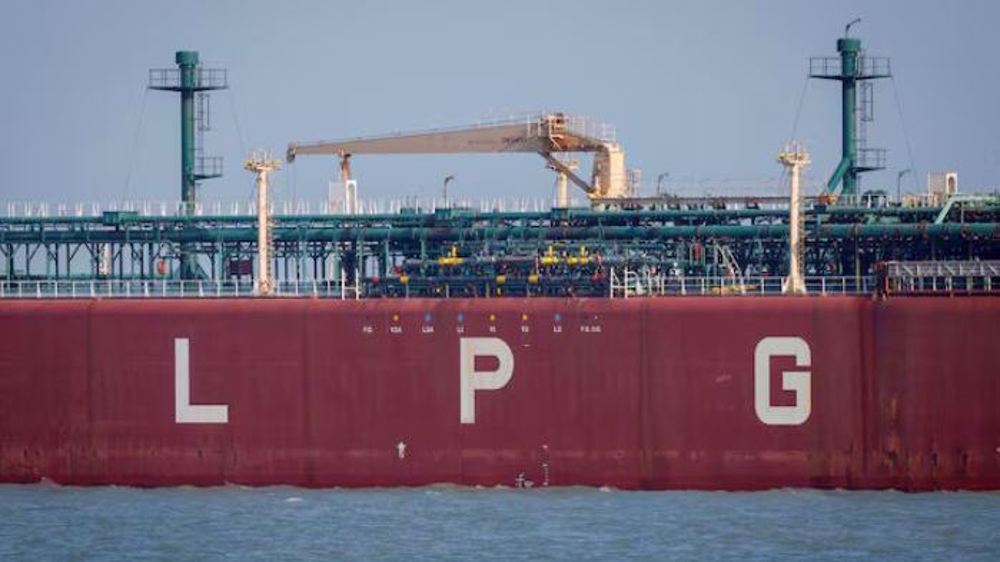
A report says Iran has managed to export liquefied petroleum gas and jet fuel, despite a US naval blockade which was reimposed in July.
Citing four people in maritime security who track Persian Gulf oil movements, Reuters said in a report on Friday that Iran has in recent weeks been exporting petroleum products, with a growing volume of ship-to-ship transfers by other Persian Gulf producers off Oman
Analysis by a US advocacy group which monitors Iran-related tanker traffic using ship and satellite tracking, the so-called “United Against Nuclear Iran (UANI)”, reportedly showed that at least eight gas tankers carrying Iranian LPG have left the Sea of Oman since mid-July.
Another tanker carrying Iranian jet fuel reportedly reached Myanmar last month, according to satellite imagery and analysis by maritime intelligence group SynMax.
According to the report, most of the tankers are under US sanctions for transporting Iranian petroleum and petrochemical products.
Jemima Shelley, a senior research analyst with UANI, said some Iranian LPG tankers transferred cargoes near the Omani coastal towns of Shinas and Sohar, while others waited in the Sea of Oman before heading past the US blockade, which US Central Command (CENTCOM) has said sits outside the Sea of Oman as they avoid getting too close to Iranian shores out of fear of being targeted by Iranian armed forces.
Shelley added that the total amount of these LPG cargoes was estimated at 4.1 million barrels.
According to UANI's analysis, most of the cargoes headed to Malaysia's Eastern Outer Port Limits to conduct further STS transfers for likely destinations in China.

The US naval blockade was first imposed on Iran-related oil exports on April 13, before it was lifted in June after the US reached a Memorandum of Understanding with Iran. However, it was re-imposed on July 14 following the US violation of the understanding and the collapse of the MoU.
The Islamabad MoU was signed in June after months of Pakistani-mediated diplomacy, following the 40-day US-Israeli war of aggression against Iran that began on February 28.
The 14-point agreement committed both sides to ending military operations "on all fronts" and provided for the suspension of wartime restrictions placed by Iran on the Strait of Hormuz, the lifting of the US naval blockade, and the release of frozen Iranian assets.
However, the US repeatedly violated the agreement, including through military strikes, the revocation of oil sale licenses, and continued Israeli attacks against Lebanon.
 This makes it easy to access the Press TV website