

Iran’s Energy Minister has announced a massive acceleration of the "Every Home, A Power Plant" national initiative, aiming to equip 600,000 households with rooftop solar panels in a move to decentralize the country's power grid and shield it from enemy sabotage.
Speaking on the implementation of a direct directive from the Leader of the Islamic Revolution Ayatollah Seyyed Mojtaba Khamenei, Energy Minister Abbas Aliabadi emphasized that the shift toward distributed, renewable energy is now a top national priority.
"Developing distributed power generation systems through renewable energy not only helps secure a stable power supply but also plays a highly prominent role in passive defense," Aliabadi stated, noting that this approach drastically enhances the security and sustainability of the network when infrastructure faces external threats.
The Leader has stressed the necessity of moving toward household energy self-sufficiency, urging that every home should be capable of generating its own electricity via solar technology to reduce reliance on external grids.
This push into decentralized energy carries profound strategic and military implications.
In recent years, US and Israeli aggressions have specifically targeted Iran’s centralized energy, nuclear, and industrial infrastructure.
US President Donald Trump has also repeatedly threatened to bomb Iran's power plants and other civilian energy facilities.
A decentralized grid comprised of hundreds of thousands of micro-power plants is virtually immune to large-scale enemy strikes, ensuring uninterrupted electricity for the nation even under full-scale military aggression.
300 sunny days a year
Currently, 51,000 homes across Iran have already been equipped with rooftop renewable generators, often in cooperation with grassroots organizations like the Basij and the Imam Khomeini Relief Foundation.
Under the expanded roadmap, citizens will be empowered to become independent energy producers, consuming their own electricity and selling surplus power back to the national grid.
The initiative leverages Iran’s immense geographic advantage. Situated in the global solar belt, Iran enjoys over 300 sunny days a year and more than 2,800 hours of annual sunshine, providing an ideal environment for small-scale solar farms.
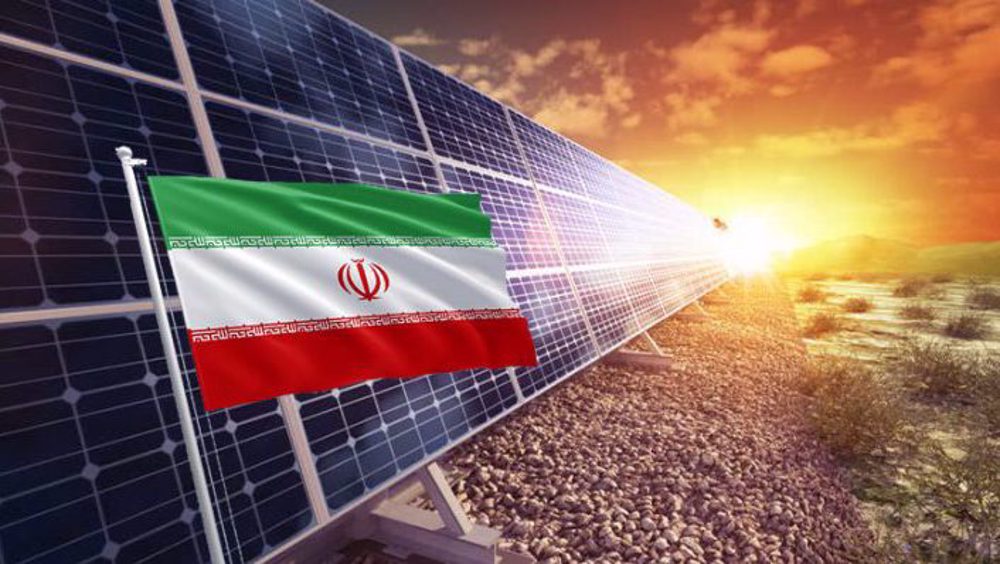
While Iran’s installed renewable capacity currently stands at over 3,160 megawatts—with solar accounting for roughly 83 percent of that figure—solar energy still makes up a modest 3.5 to 5 percent of the total national energy basket.
This new directive is expected to trigger a shift, drastically increasing solar's share and reducing reliance on traditional, vulnerable power plants.
To ensure widespread public participation, the government has introduced highly attractive economic incentives.
State-backed banks are providing low-interest facilities covering up to 80 percent of the installation costs, transforming citizens into stakeholders in the nation's energy security and wartime resilience.
 This makes it easy to access the Press TV website