

The 26th International Electricity Industry Exhibition opened in Tehran on Saturday, bringing together 420 domestic and foreign companies showcasing technologies, equipment, and engineering capabilities across Iran's electricity industry.
Supported by the Energy Ministry and specialist industry associations, the exhibition runs from November 7 to 10, with 350 Iranian companies and 70 foreign participants representing different segments of the electricity value chain.
The gathering comes as Iran's installed electricity generation capacity has surpassed 102,000 megawatts, representing approximately fourteenfold expansion since the 1979 Islamic Revolution, according to figures published by Iranian electricity authorities.
Before the revolution, installed generating capacity stood at approximately 7,000 megawatts, while the electricity industry remained dependent on foreign suppliers for substantial portions of its equipment and specialized technical requirements.
The subsequent transformation involved expanding transmission networks, electrifying underserved rural communities and strengthening domestic capabilities in power generation, operation and maintenance.
A particularly revealing measure is rural electrification, which accelerated considerably during the 1980s, when electricity connections expanded despite the economic disruption and infrastructure destruction associated with the eight-year war imposed by Iraq.
Research published in the Journal of Demographic Economics documents how the proportion of electrified villages increased from 5.9 percent in 1976 to 44.3 percent by 1988, demonstrating the geographical redistribution of infrastructure investment.
By 2006, approximately 92.3 percent of Iranian villages had electricity connections, while the World Bank's latest available indicator records electricity access reaching 100 percent of Iran's population in 2024.
This expansion created a substantial domestic market for electrical equipment, construction, maintenance and specialized engineering, laying the foundation for further industrial development and technological localization.
One of the most consequential developments occurred during the 1990s, when Iran began organizing specialized industrial enterprises capable of undertaking increasingly sophisticated power station construction and equipment manufacturing.
MAPNA Group in 1994 marked an important institutional development, bringing power plant project management, engineering, procurement, and construction activities into a more integrated industrial organization.
The development of turbine manufacturing illustrates how this industrial transformation occurred through successive stages rather than an immediate transition towards technological independence.
Initially, Iranian companies assembled equipment under foreign licenses, subsequently established manufacturing partnerships and progressively expanded their ability to manufacture components and develop locally adapted turbine technologies.
A 2024 Valdai Discussion Club study traces this progression through MAPNA's establishment of Turbine Engineering and Manufacturing Company, known as TUGA, in 1999, alongside complementary industrial initiatives.
By approximately 2010, the study reports, Iranian manufacturers had advanced towards independently manufacturing heavy-duty gas turbines, following years of technological learning, industrial investment and collaboration with international suppliers.
MAPNA's turbine portfolio subsequently incorporated several platforms, including the MGT70, developed from the Siemens V94.2 design, alongside industrial turbines derived from other internationally established technologies.
Turbine manufacturing requires specialized capabilities extending beyond metalworking, encompassing precision machining, advanced materials, thermal engineering, combustion systems, and extensive testing.
Officials reported in 2024 that domestic manufacturers supplied more than 91 percent of components and equipment required for power plant construction.
Iran's thermal generation industry also expanded substantially, with official figures indicating that installed thermal generating capacity exceeded 74,000 megawatts, distributed across hundreds of generating units and power stations.
The development of turbine manufacturing has been accompanied by domestic capabilities in generator production, steam turbines, auxiliary systems, industrial compressors and the specialized components.
Another significant indicator is maintenance engineering, where Iranian specialists increasingly undertake turbine overhauls, component reconstruction and equipment manufacturing previously requiring substantial reliance on international suppliers.
The Iran Power Plant Repairs Company reported manufacturing approximately 37,000 components and pieces of equipment, while Iranian engineers also undertook maintenance operations at power stations in neighboring countries.
Transmission infrastructure requires equally sophisticated capabilities in electrical engineering, manufacturing and system management.
Iran's transmission system evolved from a relatively limited network into an interconnected national infrastructure, supported by high-voltage substations, transmission corridors and increasingly sophisticated protection and control equipment.
More recently, Iranian experts have reported manufacturing high-capacity transmission conductors, developing advanced transformers and expanding the communications infrastructure supporting national electricity network operations.
An illustrative achievement emerged in 2024, when Iran Transfo completed development of a domestically designed three-phase transformer rated at 500 megavolt-amperes, among the largest units manufactured nationally.
The approximately 335-tonne transformer measures fourteen meters in length and was designed to consolidate three single-phase units, reducing installation requirements and improving the utilization of available substation space.
Its development demonstrates the accumulation of capabilities in electromagnetic design, insulation systems, thermal management, digital monitoring and precision manufacturing, all essential for operating high-capacity electricity transmission networks.
Other developments include domestically manufactured low-loss transformers, high-capacity transmission conductors and advanced network monitoring, alongside approximately 38,000 km of fiber-optic infrastructure across Iran’s electricity sector.
Smart metering represents another technological extension, with Tavanir reporting more than two million installed smart meters and a national electricity monitoring center supporting increasingly detailed consumption analysis.
These developments reflect a broader transition from simply expanding electricity infrastructure towards integrating digital communications, automated monitoring and more sophisticated operational management throughout the national electricity system.
The capabilities developed through domestic infrastructure program have also created opportunities for Iranian engineering companies to undertake construction, rehabilitation and maintenance assignments in international electricity markets.

A notable example of Iran’s overseas engineering capabilities is Sri Lanka’s Uma Oya Multipurpose Development Project, executed by Iranian contractor FARAB under an EPC agreement awarded in 2010.
Valued at approximately $514 million, the project was completed and officially commissioned in April 2024. It combines a 120-megawatt hydropower plant, designed to generate approximately 290 gigawatt-hours annually, with extensive water-transfer and irrigation infrastructure serving southeastern Sri Lanka.
Its successful delivery demonstrates Iranian contractors’ capacity to execute complex international infrastructure projects integrating hydraulic engineering, underground construction, irrigation systems and power generation.
Iranian specialists have also undertaken repair and maintenance assignments in Iraqi and Syrian power stations, alongside technical cooperation and energy-sector projects in Tajikistan, Azerbaijan and other neighboring markets.
Iran's industrial capabilities are also being applied to a changing generation portfolio. Non-hydroelectric renewable generating capacity increased from 1,130 megawatts in August 2024 to 5,836 megawatts by September 2026, representing substantial expansion.
This expansion has created opportunities for domestic manufacturers, construction companies, electrical equipment suppliers and engineering contractors to participate in the emerging renewable market.
Alongside renewables, combined-cycle technology has become increasingly important, allowing existing gas-fired generating facilities to produce additional electricity by recovering heat from gas turbines and using it to operate steam turbines.
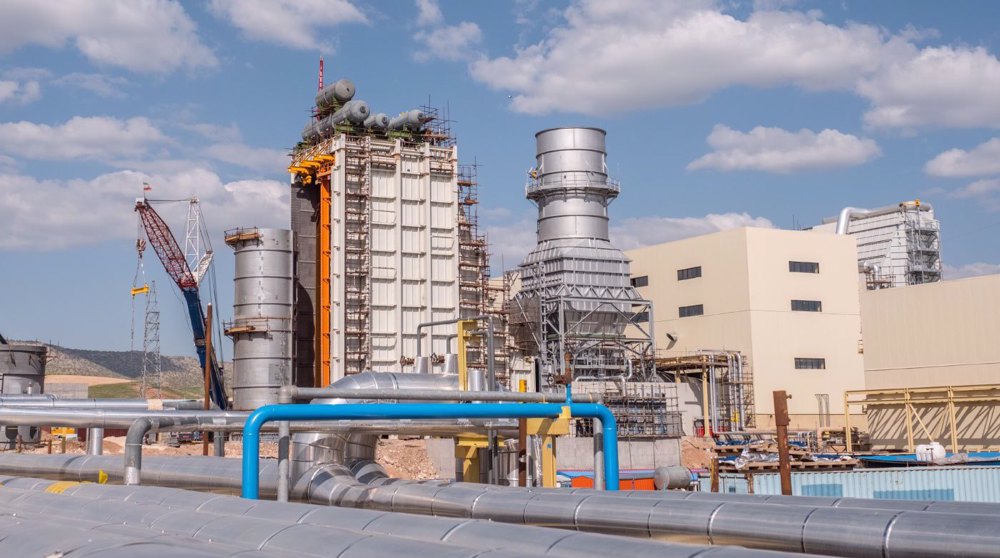
Nuclear generation constitutes another established element of the country's technological base, with the Bushehr nuclear power station representing Iran's first operational commercial nuclear electricity generating facility.
The country currently ranks sixteenth globally in installed generating capacity, placing it among the world's substantial national electricity systems.
The industrial significance, however, lies in the accumulated capabilities supporting that infrastructure, particularly turbine manufacturing, transformer production, engineering services, equipment rehabilitation and the construction of complex electricity facilities.
The twenty-sixth Tehran exhibition brings these capabilities together in one industrial setting, with domestic manufacturers presenting their products alongside foreign companies and potential commercial and technological partners.
The participation of 420 companies, including 350 Iranian enterprises, provides a contemporary illustration of the industry's manufacturing breadth, specialist expertise and continuing engagement with international electricity-sector markets.
 This makes it easy to access the Press TV website