

Midterm elections in the US are general elections that are held around the midpoint of a president's four-year term of office. But the results of this year's midterms are attributable to just one man and his policies: US President Donald Trump.
From his erroneous policies involving tariffs to the illegal war of aggression against Iran, he has almost single-handedly debased the status of the US as a superpower with disastrous economic results that have hurt the world and also the Americans.
The midterms were a test for Donald Trump's policies and presidency, and as expected, Americans reflected their anger at the ballot box.
The economic policies that the president touts as successful, bringing in billions of dollars into the country, have not trickled down to the populace.
The US economy was doing much better under former president Joe Biden than under President Donald Trump.
This article is based on an episode of the Press TV show, Economic Divide, featuring Dr Danny Zahreddine, Director of Social Sciences at PUC Minas, Brazil, and Dr Aaron Good, Political Scientist.
How much of the current economic problems can be attributed to the Republican Party and how much to Trump's radical “economic policies”?
According to Dr Danny Zahreddine, Director of Social Sciences at PUC Minas, Brazil, “One of the main problems with the American economic policy lies in President Trump’s approach to politics.”
“He seems to believe that governing a country is like negotiation in a real estate deal or hosting a television show.”
“The radical ideology of the American far-right also plays a very important role in the decision-making process.”
“So Trump's tariff policy, it's not a simple economic strategy; it's also an attempt to retake control of parts of the world.”
“In my case, here in Latin America, it looks like a new version of the Monroe Doctrine, the big stick doctrine.”
“Nowadays, this approach may backfire by pushing countries such as Brazil, Mexico, even in the north, like Canada, to seek alternative partners in all over the world, especially China.”
“The United States is increasingly concerned about China's growing influence, but at the same time, its own political divisions and declining international credibility are undermining its ability to achieve its strategic goals.”
“Tariffs can also raise costs for American businesses and consumers, while creating uncertainty for international trade.
“So, although we cannot attribute all economic problems to the Republican Party, Trump's policies risk making the situation worse rather than better.”

One example of Donald Trump's economic policies is broad tariffs, which act as a regressive tax on American families.
The Trump administration's tariffs have functioned as a consumption tax that falls hardest on ordinary households.
The Joint Economic Committee's Democratic staff estimated that by January 2026, the average American family had paid more than $1,700 in additional costs due to Donald Trump's tariffs.
Then we have the Medicaid cuts, stripping coverage without improving employment. The One Big Beautiful Bill Act, signed in July 2025, imposed work requirements and more frequent eligibility redeterminations on Medicaid expansion enrollees, projected to reduce federal Medicaid spending by nearly one trillion dollars over a decade.
Critically, these savings are achieved primarily by stripping coverage from people who remain eligible, not by eliminating waste.
The illegal US-Israeli aggression against Iran has led to disruptions in the US, with increased energy costs leading to spiraling costs and massive inflation.
The war on Iran appears to be the biggest mistake ever made by any Republican backed US president.
Dr Danny Zahreddine asserts that “the war against Iran was a disastrous decision on several levels: humanitarian, strategic, geopolitical, and economic.”
“Throughout American history, no president had agreed to launch a war against Iran at Israel's request. Donald Trump was the very first American president to accept the Israel call for such a war.”
“The decision to join Israel's military campaign against Iran has exposed the United States to serious regional and domestic consequences.”
“Iran had warned that, in the event of a war, it would retaliate against American military bases in the Middle East and threaten shipping through the Strait of Hormuz, closing the Strait of Hormuz.”
“The potential consequences for the global energy market were very, very clear.”
“Higher fuel prices, inflationary pressures, growing financial burdens on American households, and mounting public opposition were all risks that should have been carefully considered by the Americans. This issue could also impact the Republican Party in the midterm elections that will happen now in November.”
“What made this decision so unbelievable to start a war against Iran is that its potential economic repercussions were widely predictable. The strategic cost of military intervention in such a sensitive region should have been central to the decision-making process.”
The Republicans were given the America First mandate in 2024. Donald Trump drastically violated that mandate with his Iran war, Epstein cover-up, and an unaffordable economy. For the past two years, Republicans have gone along with Donald Trump's campaign, betrayals, and never even tried to steer back to that mandate. (Former Congresswoman, Marjorie Taylor Greene)

The average family that heats their home with oil is going to pay $1,500 more this winter because of Donald Trump's insane Iran war. Some people will go cold. Some may die. This isn't hyperbole. This is the consequence of having a president who just doesn't care about you. (Chris Murphy, US Senator, Dem.)
The US economy was doing much better under President Joe Biden than under President Donald Trump.
How much of the current economic problems can be attributed to the Republican Party and how much to Trump's radical “economic policies”?
“Dr Aaron Good, a political scientist, sets forth that, ' Historically, there's a better performance under Democratic administrations than Republican administrations. So there is some difference there.”
“Trump's policies have been disastrous for the US economy. The tariffs were unproductive and caused inflation in the US without really helping American manufacturing much.”
“And the Iran war is leading to exploding energy costs and a real diminishment of the strategic petroleum reserves of the US”
“It's also the case that we may be seeing the end of the ability of Western financial entities to manipulate the price of oil and other commodities through different financial instruments that nobody really understands and sort of speculative tools that they use to keep prices high or low, however they want them.“
“The Republican administration of Donald Trump is presiding over a disaster that may lead to a global depression. It could be potentially worse than the depression of the late 1920s and the 1930s, depending on how things play out.”
“So neither party does much to improve the problems with the American economy nor how unequal the outcomes are, but the Republican Party has been worse on the margins.”
“And Trump is a disaster.”
Mass deportations and job losses for American workers
The administration's deportation surge was premised on the claim that removing undocumented workers would free up jobs and raise wages for American-born workers.
A National Bureau of Economic Research study comparing communities with deportation surges between January and October 2025, however, found the opposite to be the case.
Employment fell for both immigrants and American-born workers, with male American-born workers without a college degree losing 1.3 percent of employment in affected industries.
The illegal US-Israeli aggression against Iran has led to disruptions in the US, with increased energy costs leading to spiraling costs and massive inflation.
The war on Iran appears to be the biggest mistake ever made by any Republican-backed US president.
“This may be the biggest mistake in US foreign policy history. There have been other bad decisions in the past that worked out in different ways for the US. In particular, the Vietnam War, which seems to be a disaster for the US, but because of the US control of global energy, the global energy supply, and, the control over the international currency, they were able to turn the Vietnam War disaster into sort of a strange victory, although people didn't understand that until decades later.“
“I don't see an easy way for the US to recreate what they did in the 70s with the collapse of the dollar and the creation of the petrodollar system.”
“In fact, this is a war that seems to be on track to either greatly weaken or destroy the petrodollar system. And that leads to big problems with the US outside of West Asia, but all around the world.”
“It’s been a pillar of US and Western global dominance to control the reserve currency. And now that this petrodollar system, which underlies the whole thing, is in jeopardy, this may fundamentally weaken the US and Western domination of the world, which has lasted for centuries.”
“So this may be a global cataclysm in a sense. It may bring centuries of Western global dominance to an end.”

Donald Trump took office on January 20th, 2025; he has served about 21 months, not two complete years. This comparison with the previous US President Joe Biden uses January 2025 as the transition benchmark and the latest available observations, mostly September or October 2026.
January's monthly figures are not strictly pre-inauguration. They are the closest published benchmarks. These statistics describe changes but do not prove presidential causation.
Economist Peter Schiff, who gained widespread recognition for accurately predicting the 2008 financial crisis, is on record as saying “The world is now pulling the rug out from under the US The dollar will collapse. Gold will replace the dollar. Central banks are buying gold right now. They are getting rid of the dollar.”
If this happens, does it mean it's doomsday for the US economy?
Dr Danny Zahreddine is of the opinion that “the growing demand for gold reflects a loss of confidence in the United States as the major guarantor of the global monetary system.”
“When Washington used the dollar as a political weapon, freezing assets and imposing sanctions on countries such as Iran and Russia, it creates a dangerous precedent.”
“Other countries like Brazil or in Asia, even in Europe, may begin to question whether their sovereign assets are truly safe within the American financial system.”
“As a result, central banks in all over the world are diversifying their reserves, increasing their gold holdings, and in some cases, bringing back their gold reserves.”
“This does not necessarily mean that gold will replace the dollar overnight, in my opinion, but it does sign a gradual erosion of trust.”
“In the long run, this process could have deep consequences for the US economy, mainly if it leads to a sustained decline in international demand for US Treasury bonds.”
“That could increase borrowing costs and weaken one of America's major financial advantages. The real danger, therefore, is not an immediate collapse of the dollar, but the gradual erosion of the political trust that underpins its global dominance.”
Paychecks rose in dollars, but purchasing power is the key test here. In September 2026, average hourly earnings were 3 percent higher than a year earlier, while the CPI rose 3.7 percent.
BLS reported real average hourly earnings fell by 0.5 percent in September alone, this points to a squeeze in the latest month, not a complete measure of household welfare.
Earnings differ across workers, and the real wage series is revised. Federal borrowing also increased over the last two fiscal years.
The federal deficit was approximately 1.575 trillion dollars in fiscal year 2025 and 1.992 trillion dollars in fiscal year 2026, a rise of about 12.2 percent.
Fiscal year 2025 began before Donald Trump's inauguration, so it is not wholly attributable to his administration. Fiscal year 2026 is the first full fiscal year under his presidency.
Deficits reflect spending, revenue, economic conditions, and legislation, Interest costs are also of significance. The Federal Reserve's policy rate was 4.25 percent, up to 4.50 percent when it met on January 29th in 2025 and stood at 3.75 percent to 4 percent in October 2026.
Lower rates can ease some borrowing costs, although mortgage and other market rates do not move on a one-for-one basis.
Overall, the data are mixed: faster recent GDP growth, higher inflation, slightly higher unemployment, slower latest hiring, and a larger deficit.
The president does not set Fed rates. Context matters, too. Taken together, these indicators show contrasting developments rather than a single, consistent direction.
GDP growth accelerated, and the Federal Reserve's policy rate declined, while inflation, unemployment, and the federal deficit increased.
The latest wage figures also suggest pressure on purchasing power.
These comparisons cannot isolate presidential policy from global events, Congressional decisions, inherited economic conditions, or, independent Federal Reserve actions.
A complete assessment should therefore consider multiple indicators, their time periods, and subsequent revisions.
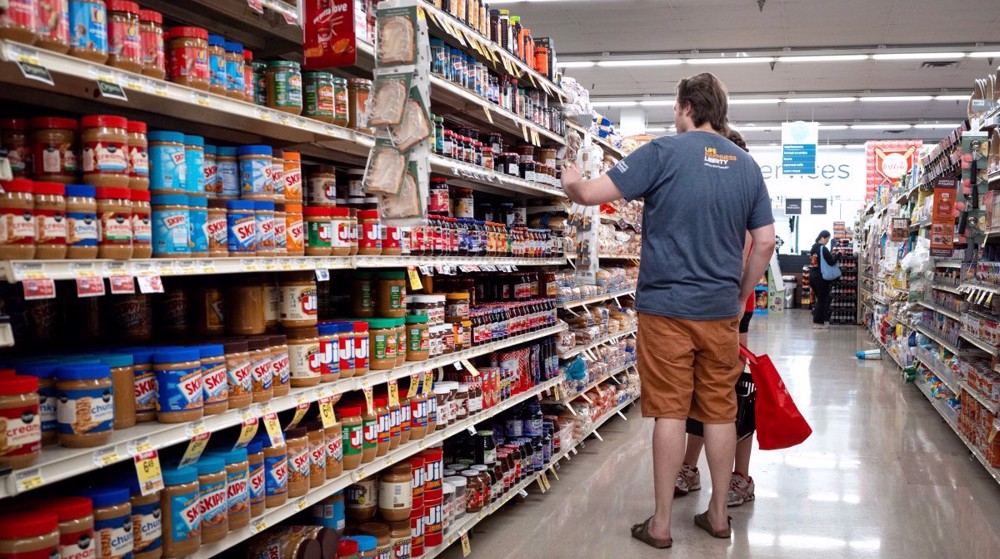
It would be unfair to just blame Donald Trump for the current US economy's condition; there are other factors at play such as the US debt and the standing of the dollar.
With central banks as far afield as China and Japan selling their dollar reserves, how would that affect the US economy?
Dr. Aaron Good contends he is “not sure how abrupt it will be in terms of being a doomsday type event. It may be a more gradual phenomenon.”
“The price of gold has been steadily going up and up, and that may be a permanent thing to some degree. Central banks may be more likely to retain more of their reserves in gold in the future. Or it may be a temporary, sort of temporary move because of the instability, and that after this shakes out, if there is a new global financial architecture created that's more equitable and fair and just than the petrodollar system, it may be that other currencies and commodities will take some of the pressure off of gold to act as the main bulwark in the country's foreign exchange reserves or their reserves in general, right, since it's not really foreign exchange.”
“So predicting this is not going to be easy if you're going to be precise at all, but in the short and medium term, gold seems to be going up and it's going to be more important for the different countries of the world as they try to hedge their bets against all of the insecurity in the system.”
“It's what John Maynard Keynes called a barbarous relic of the past, but it's still necessary because we have yet to work out a more reasonable and fair global monetary system.”
Two years left before his presidency ends, if he doesn't change the constitution to run for another term, the US President, Donald Trump, will join the dustbin of history as being one of the most outspoken and vain presidents that Americans have possibly ever had.
The US standing in the world has definitely taken a major hit due to his erratic and irrational behavior, but it will take some time for the world to recuperate from the economic hits incurred by the US, including the US itself; two years and counting.

 This makes it easy to access the Press TV website