

An Iraqi anti-terror resistance group has flatly rejected remarks by Foreign Minister Fuad Hussein that it had agreed to a government plan to bring weapons under state control and said it did not sign an accord with the Baghdad government to hand over its arms.
Kata'ib Sayyid al-Shuhada, in a statement issued late on Saturday, dismissed “inaccurate remarks” by Hussein, stressing that it had neither declared, endorsed, nor signed anything concerning its weapons.
“We signed a sovereignty agreement alongside three other armed factions with the Coordination Framework parties and the prime minister,” it said, emphasizing it remained firmly committed to its terms.
Kata'ib Sayyid al-Shuhada also urged Iraqi government officials to ensure accuracy and responsibility when sharing information and making public statements to avoid confusion or misleading public opinion.
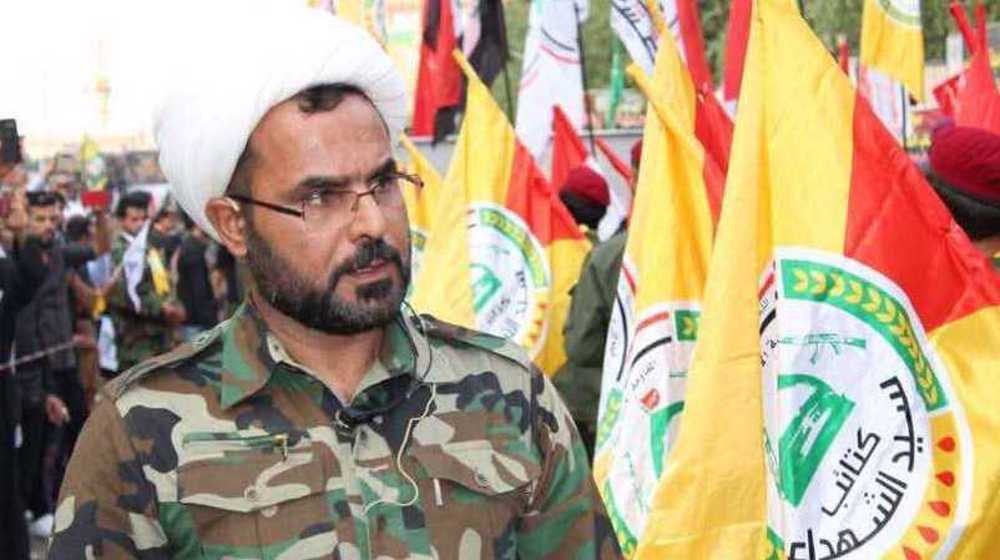
Earlier on Saturday, Hussein said Prime Minister Ali al-Zaidi had reached understandings with four armed factions on restricting weapons to state control and strengthening the capabilities of the security forces.
Hussein asserted that Asa'ib Ahl al-Haq and Kata'ib Sayyid al-Shuhada resistance groups had agreed to regulate their weapons, while negotiations with Harakat Hezbollah al-Nujaba and Kata’ib Hezbollah were still ongoing.
On August 11, the Iraqi prime minister instructed officials to prepare a bill aimed at placing weapons solely under the control of the state.
Some Iraqi resistance factions, including Saraya al-Salam, Asa’ib Ahl al-Haq, and Kata’ib al-Imam Ali, have consented to merge with the national armed forces; however, Kata’ib Hezbollah has committed to maintaining its “resistance weapons” and enhancing its stockpile.
Abdul Qader al-Karbalaei, military deputy of the Harakat Hezbollah al-Nujaba movement, an Iraqi resistance group, said last month that terms such as “disarmament,” “handover,” and “restriction” had no place in the Resistance’s vocabulary.
He said that the group's “sacred weapons of the Resistance” will never be surrendered.
In September, Iraqi legislator Mohammed al-Moussawi said that the arms in possession of Iraqi resistance groups are primarily intended to deter and eliminate terrorist threats and defeat Daesh criminals.
“These weapons serve national and historical functions, including confronting the menace of terrorism, liberating occupied regions, and defending the sovereignty and stability of the country,” Moussawi stated.
The Iraqi legislator emphasized that “resistance weapons” are guarantors of Iraq’s security and safety, and protect the homeland and nation against potential threats as well as destructive and fiendish plots.
“These weapons continue to be aimed at enemies and terrorist groups, and will never target the masses that resistance groups are duty-bound to protect,” Moussawi pointed out.
 This makes it easy to access the Press TV website